The hot side
Oven repair.
No heat, weak heat, or heat that quits partway through a roast. All common, all fixable.
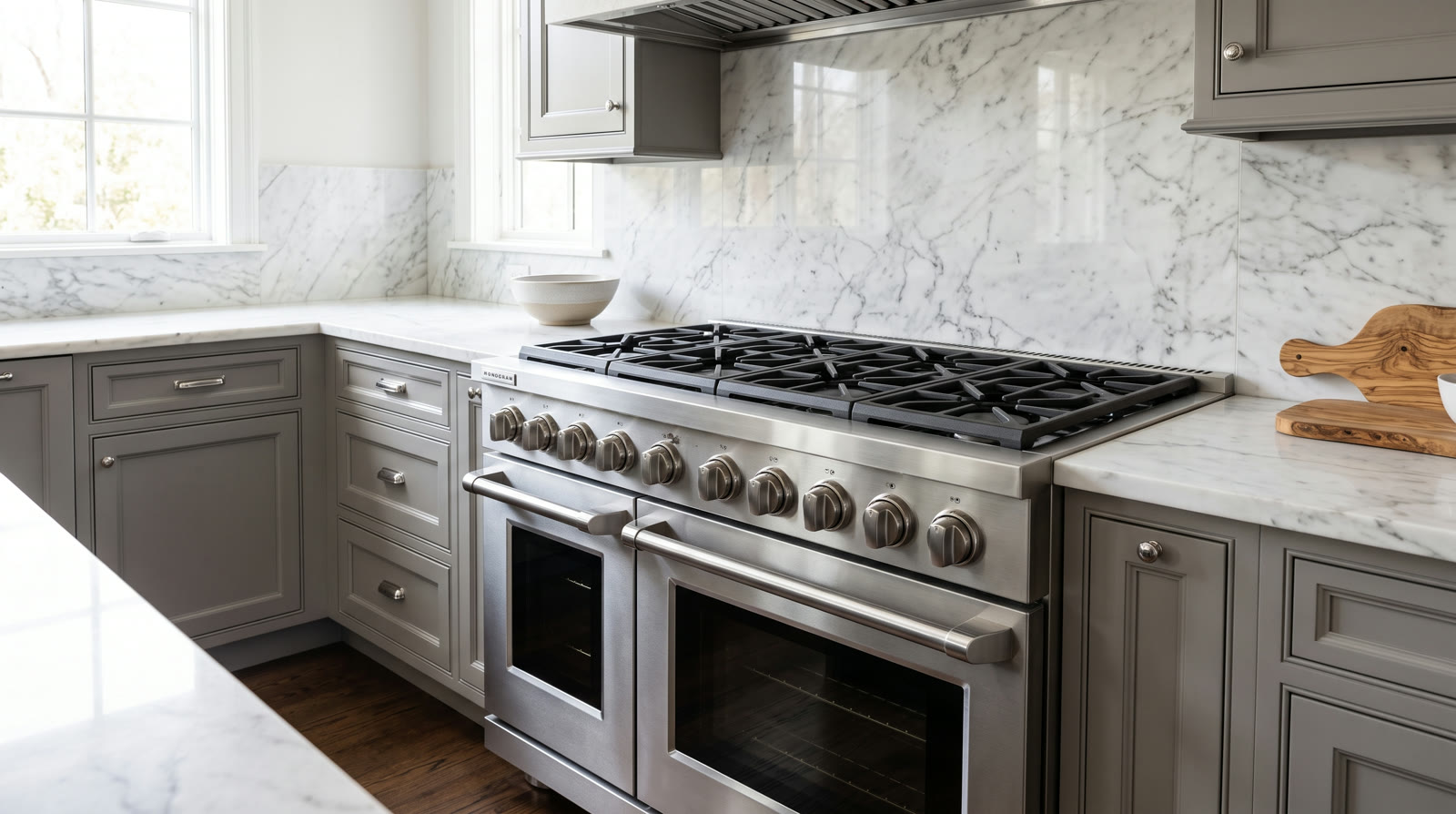
The hot side
No heat, weak heat, or heat that quits partway through a roast. All common, all fixable.
When an oven stops heating, the cause is usually one tired component, not the whole machine. On gas ovens the usual culprit is the bake igniter, still glowing but no longer pulling enough current to open the valve. On electric ovens the suspects shift to elements, sensors, and relays.
We test the circuit with instruments, find the component that actually failed, and replace it with the genuine part, whether the badge says GE, Whirlpool, LG, Samsung, Bosch, Electrolux, Frigidaire, KitchenAid, Maytag, or Kenmore.
It glows, so it looks alive, but it no longer opens the gas valve. The most common oven repair in existence.
Bake and broil elements burn out with age. Blistering or a visible break is the tell.
The oven heats, but never to the number you set. Testing and calibration bring it back to true.
The board calls for heat and nothing answers. We trace the circuit before condemning any part.
Heat escapes faster than the oven makes it. Long preheats and pale baking follow a worn gasket or dropped hinge.
A cleaning cycle that ended in a locked door or a dead display. We see it weekly and know where to look.
Almost always an igniter running weak. It is a routine repair, and common igniters ride on the truck.
Different one, usually a convection fan, a partial element failure, or calibration drift. All three are measurable and fixable.
Usually. Igniters, elements, and sensors for the common platforms travel with us, and most oven calls end with a working oven the same day.
One call and it is off your list. Open daily, 7am to 7pm.
Same day windows go to whoever calls first. The $89 diagnostic folds into your repair, so finding out costs nothing extra.