The cold and wet side
Refrigerator repair.
Warm shelves count as an emergency here, and the schedule treats them that way.
The cold and wet side
Warm shelves count as an emergency here, and the schedule treats them that way.
A refrigerator that stops holding temperature usually has one failed link, not a dead system. A condenser coil buried in dust, an evaporator fan that quit, a compressor down on capacity, a control reading a bad sensor. The brand on the door changes the parts, not the physics.
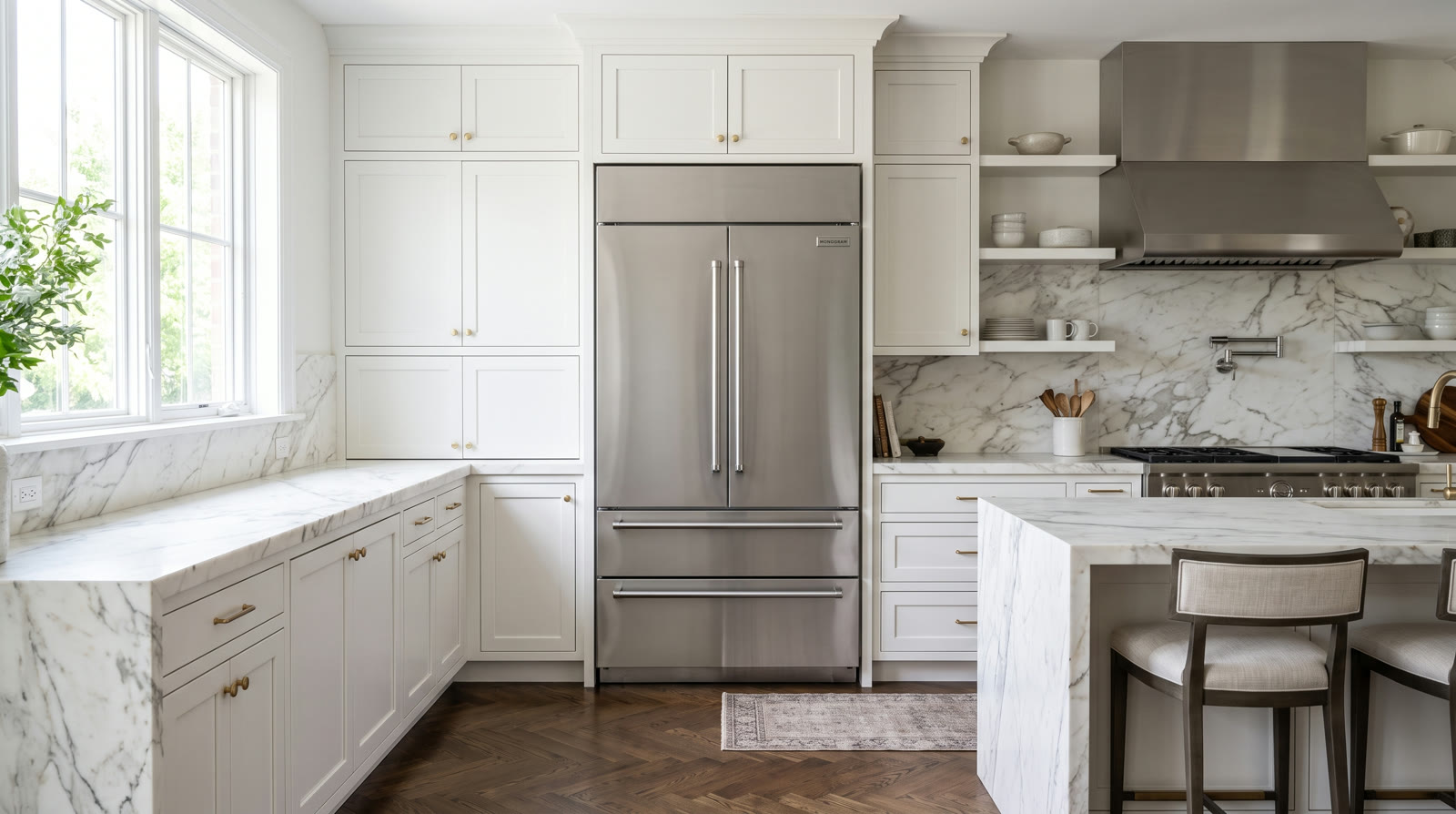
We diagnose with instruments, confirm the failed component, and repair exactly that. Built in columns, French doors, side by sides, and panel integrated units across LG, Samsung, GE, Whirlpool, Frigidaire, Electrolux, Kenmore, and the rest of the roster.
A coil wearing a blanket of dust cannot shed heat. The machine runs nonstop and wears itself out doing it.
The cold exists but never circulates. Everything sounds normal while the shelves warm up.
Capacity fades with age, and on some platforms a known weak compressor design fades early. We measure before we condemn.
Refrigerant seeps out through a pinhole over weeks. Gauges tell the truth here.
Bad temperature data sends the unit chasing the wrong target. We read exactly what the board reads.
A tired seal invites humid air in around the clock, and summer pushes the system past what it can absorb.
A warm refrigerator moves to the front of the schedule. Most of our territory gets same day or next morning service, weekends included.
Hold off and keep the doors shut. A full unit protects itself for hours. If the first visit cannot restore the cold, your tech helps you plan for the perishables.
Yes. Ice systems, water valves, filters, and dispensers are part of nearly every refrigerator call we run.
One call and it is off your list. Open daily, 7am to 7pm.
Same day windows go to whoever calls first. The $89 diagnostic folds into your repair, so finding out costs nothing extra.